A VP of Engineering at an enterprise we work with put the question plainly on a call recently: "Can we build it ourselves? How difficult can it be to build CodeRabbit?"
A few weeks later, in a different conversation with a different enterprise, the answer arrived as an architecture diagram. CodeRabbit appeared in a single box labeled "Compliance Layer and the Guardrails," sitting above coding agents and engineers that ship code. Not an AI reviewer or code review tool but the compliance layer.
That bar is what enterprise buyers are actually buying. It's the part homegrown AI reviewers fail to deliver. The hard part isn't the first demo. It's holding a consistent, unified quality bar across hundreds of engineers, dozens of teams, and an AI tooling landscape that shifts constantly. And, then making sure the standard actually gets enforced.
Those, and others, are the real problems CodeRabbit was built to solve.
What consistency actually means
Code in a modern engineering org comes from more places than it used to with more agents, more teams, and more generations of the tech stack. Consistency in review is how the standard survives the variety.
That consistency has to hold across three moving targets, where the code lands, who (or what) wrote it, and what your team adopts next.
A homegrown AI code reviewer usually starts with one repo, one workflow, and one team member’s preference. That can work for a pilot but it breaks when the standard has to follow every team, every tool, and every code path.
CodeRabbit acts as the independent verification layer that holds the same quality bar across three moving targets:
Same review, wherever the code lands: GitHub, GitLab, Azure DevOps, Bitbucket, plus CLI and IDE for inline feedback. The AI reviewer is the same on every surface where your team ships.
Same review, whoever wrote the code: Junior developer, senior engineer, Cursor, Copilot, Claude Code, Codex. Every PR gets reviewed against the same bar, with the same depth of context.
Same review, whatever your team adopts next: As your team adopts new coding agents and AI tools across an agentic SDLC, the reviewer moves with you. Your standards stay intact, without forcing you to rebuild the review system every time the stack changes.
What makes a high-quality review trustworthy?
Now your AI reviewer covers every surface, every author, every coding agent your team uses. The next question is whether what it says is worth reading and actionable. The review has to earn trust: feedback grounded in your codebase, your team's rules, and what your team has already learned. CodeRabbit grounds every review in all three, and gets better with use.
Reviews grounded in your context: CodeRabbit’s context engine leverages code graph, multi-repo dependencies, prior PR discussions, ticketing systems, docs, systems via MCP, and knowledge base. We have been building this for over three years across 17,000+ customers and 2M PRs reviewed per week.
Reviews tuned to your standards: You set the path instructions, configurations, custom checks and code guidelines that matter to your team. Every review respects them. The comments are specific to your codebase, not like generic rules your team has learned to tune out.
Reviews improved by every learning: When one engineer teaches the AI reviewer a standard, a naming convention, a security rule, or a path-specific instruction, the rest of the team benefits. The reviewer gets sharper with use, and that learning compounds across the organization.
Many teams assume they need to build their own review system to fit their workflow, incorporate their context, and make reviews relevant to their codebase. But that is a misconception. CodeRabbit is built to adapt to how teams work and is highly customizable. Teams can connect their ticketing systems, bring in additional data and internal systems through MCP, and use custom instructions and configurations to make reviews reflect their standards and preferences. Unlike a DIY system, CodeRabbit can scale and evolve as teams grow, workflows change, and the tooling landscape shifts, without requiring teams to rebuild and maintain the review infrastructure themselves. For local agent workflows, CodeRabbit Skills are an example of that review layer meeting developers inside the tools they already use.
The result is code review that is high-quality, explainable, and easy to act on. That is why one enterprise customer described CodeRabbit as both a “safety net for code” and a “24/7 mentor” helping developers catch issues while also understanding the engineering practices behind them.
Turning quality standards into compliance gates
Consistency and quality are the floor. Compliance is what makes the floor enforceable. An AI reviewer that finds the right issue but lets the PR merge anyway isn't a quality gate.
That is why the enterprise customer we mentioned earlier did not label CodeRabbit “an AI reviewer” in their architecture diagram. They labeled it the “Compliance Layer.” Under that label were three jobs, a safety net for the code, automated governance for the standards, and a coaching loop for developers. CodeRabbit brings products that make the standard easy to define, enforce, and improve over time.
Pre-Merge Checks, the automated governance. Codify your team's Golden Paths standards, for example, "always use the Finance API for currency conversion" into automated quality gates that evaluate every pull request and fail until critical issues are resolved. Built-in checks cover the basics every team expects including docstring coverage, PR titles, descriptions, and linked-issue alignment. Custom checks enforce the rules linters miss such as sensitive data in logs, hardcoded credentials, breaking-change documentation, and migration safeguards. In the CodeRabbit dashboard, you can see which checks are running, where they’re passing or failing, and what needs to be improved to keep standards enforced.
Finishing Touches, turning fixes into enforceable remediation. Finishing Touches turns repeated fixes into repeatable remediation workflows. CodeRabbit can generate missing docstrings, write unit tests, resolve merge conflicts, and run team-specific cleanup recipes for import ordering, type tightening, and project conventions. The goal is more than just catching issues. It’s to help developers get them fixed before they merge while keeping the team’s standards intact.
Global Overrides, the org-wide policy lever. Compliance breaks down when every team manages its own version of the rules. One team updates .coderabbit.yaml, another tweaks it, a third leaves it untouched and suddenly the “standard” means something different in every repo. Global Overrides let org admins set the configuration once, such as for required path instructions for sensitive code, mandatory review profiles, and security rules. CodeRabbit applies them on the next PR across every repository, regardless of what individual repos have in their config.
Together, these features turn a consistent AI reviewer into a closed-loop compliance system. Set the policy, monitor adoption, and enforce it across every team with a dashboard to give you visibility and insights for improvement.
The question to ask before you build
If your team is weighing build vs. buy, ask yourselves the following questions
On consistency:
- Is every PR reviewed against the same bar, whether a junior developer wrote it or an AI agent did?
- Will the reviewer travel with your team when you adopt the next coding agent or platform?
On quality:
- Are the comments grounded in your codebase and configuration, or boilerplate your engineers learned to ignore?
- Does the reviewer get sharper and more useful with use?
On compliance:
- Are policies enforced before merge, not just flagged after?
- When one team rewrites their config or quietly drops a check, does the org-wide standard still apply?
That’s the bar. CodeRabbit is built to hold it across every repo, team, and coding agent. A DIY reviewer may catch issues in a narrow workflow, but it usually stops there. Most importantly, a DIY reviewer does not become the system of record for how engineering standards are verified, enforced, and improved over time.
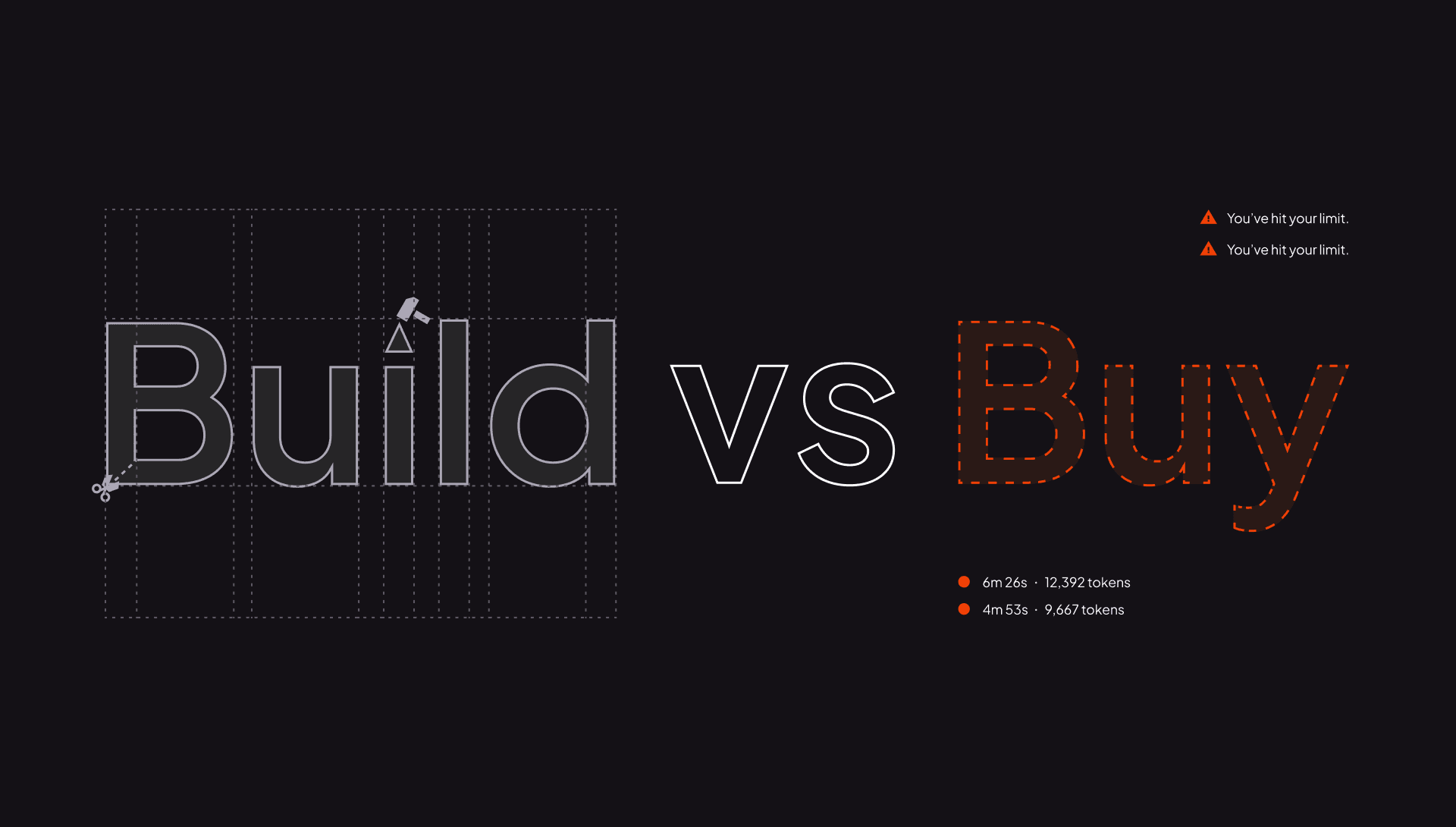
That is the real build-vs-buy question. Do you want your engineering team maintaining review infrastructure, or building the products only they can build?
See it for yourself. Try CodeRabbit for free on your repos.